

Slow The Scroll: How To Reset Your Relationship With Social Media
If you find yourself reaching for social media without thinking, you’re not alone.
It’s often the first thing we check in the morning, the last thing we see at night, and something we return to throughout the day - in moments of boredom, distraction, or simply out of habit. What feels like a quick scroll can easily turn into something more automatic; a way to stimulate the mind or, at times, to numb it.
The challenge is that this constant stream of content rarely leaves us feeling better. Instead, it can create noise, comparison, and a sense of mental clutter that’s hard to switch off from. The goal isn’t to remove social media completely. It’s to reset how you use it. To move from mindless habit to intentional engagement, and to create a healthier balance that supports your focus, mood, and sense of calm. In this guide, we’ll explore how to do exactly that.


Why Social Media Feels So Hard to Step Away From
If it feels difficult to reduce your time on social media, it’s not simply a matter of willpower.
These platforms are designed to hold attention. Infinite scroll, personalised feeds, and unpredictable rewards all play a role in keeping you engaged for longer than intended. Each time you open the app, there is the possibility of something new - something interesting, entertaining, or validating - which makes it easy to keep going.
Over time, this creates a loop. A quick check becomes a longer scroll; a moment of distraction turns into a habit. Not because you’ve chosen it consciously, but because the experience is designed to feel seamless.
In many ways, it’s not so different from binge-watching a series. Except instead of one storyline, it’s hundreds at once. Constant, varied, and always available.
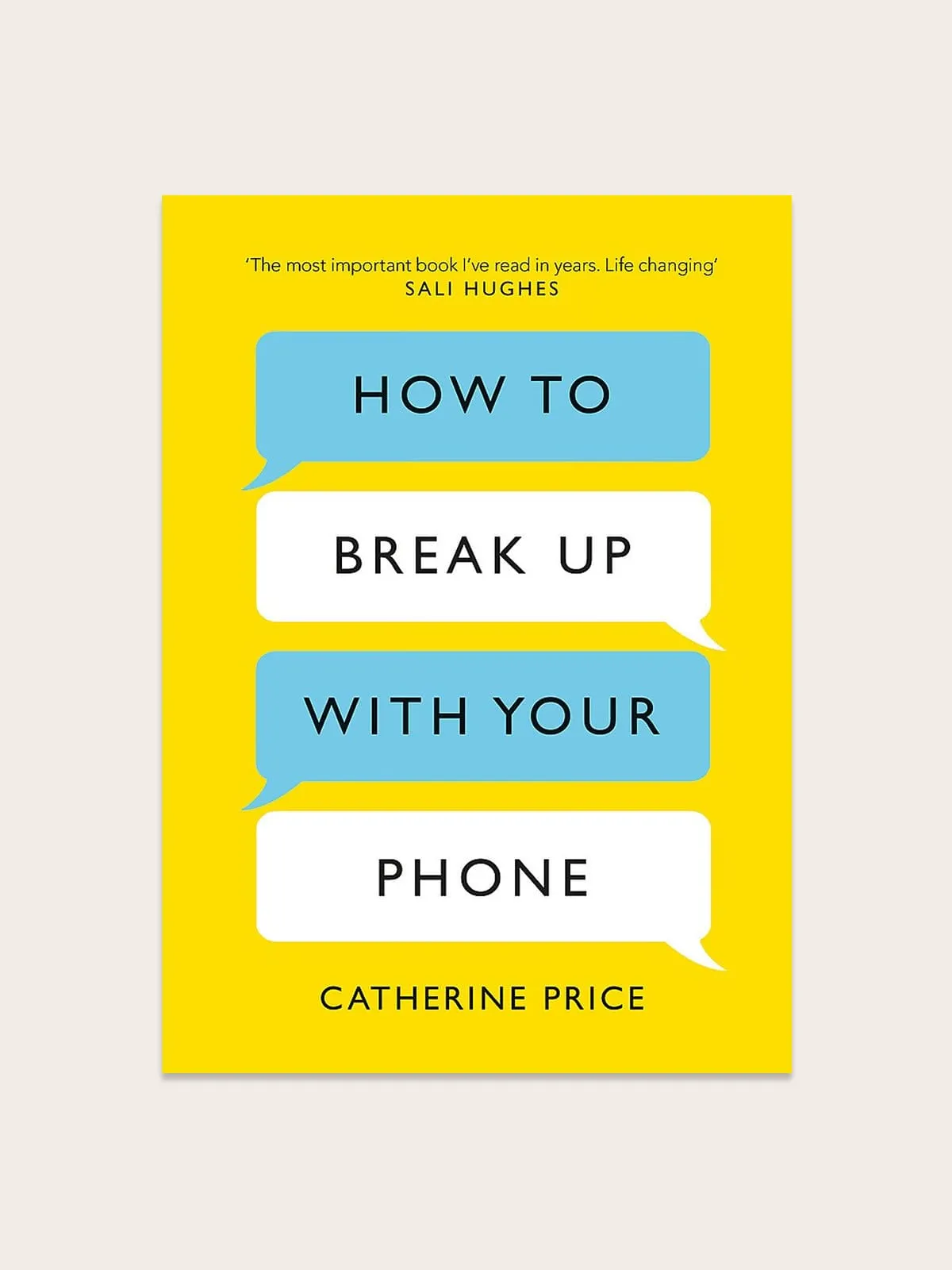
You might recognise this pattern described in the book How to Break Up with Your Phone, which explores how digital products are intentionally designed to capture attention. Understanding this helps you see it’s not just about self-discipline, but the environment you’re in.


When It Starts to Shift From Helpful to Draining
Social media isn’t inherently negative. It can be a source of inspiration, connection, and discovery. But without boundaries, the experience can begin to change.
What starts as something you check occasionally can become something you reach for without thinking. In quieter moments, it fills the space. During busier or more overwhelming times, it can become a way to switch off - or to momentarily avoid what’s in front of you.
The signs are often subtle. A tendency to check your phone more frequently than you realise. A sense of mental clutter after scrolling. Small shifts in mood, comparison, or a feeling of being slightly overstimulated.
Over time, constant input can begin to dull your sensitivity. It takes more content, more stimulation, to feel satisfied. And at the same time, it becomes harder to feel fully present without it.
This is usually the point where something starts to feel slightly off, even if it’s difficult to articulate exactly why.

Why Quitting Completely Doesn’t Always Work
When that shift happens, the instinct is often to take a more extreme approach. Deleting apps, deactivating accounts, or deciding to step away entirely. While this can feel effective in the short term, it’s not always sustainable.
Social media plays a role in modern life. It’s where people connect, share, and discover. Removing it completely can create a different kind of tension - a sense of disconnection, or the feeling of missing out on what’s happening around you.
There’s also the reality that habits rarely disappear without replacement. When something is removed too abruptly, it often returns in a similar or even stronger form.
The goal, then, isn’t necessarily to quit. It’s to refine. A similar idea is explored in the book Digital Minimalism, which focuses on using technology more intentionally, rather than removing it entirely.
The emphasis is on keeping what adds value, while letting go of what doesn’t. To keep what feels useful, while gently reducing what feels excessive or draining. A more balanced approach that fits into your life, rather than working against it.
A Smarter Way To Use Social Media: The 'Log In, Log Out' Method
Rather than removing social media entirely, this approach focuses on something simpler - bringing back intention to how you access it.
It has been tried and tested within our own routines, and centres on three shifts: replace the habit, remove constant access, and return to intentional use.
1. Replace The Habit First - Create an 'Inspo Only Account'
Before reducing your usage, replace it. Social media often fills small gaps throughout the day - moments of boredom, distraction, or pause. Without a replacement, the habit is difficult to break.
Create a separate, inspiration-led feed focused on brands, ideas, and content that feels useful or uplifting. Limit people where possible to reduce comparison.
This becomes a lighter alternative. The habit remains, but what you consume changes.
2. Log Out Of Your Personal Account
Once you have a replacement in place, log out of your personal account.
The instinct to open the app may still be there, but without immediate access to your personal feed, the experience changes. What you remove is the constant stream of updates, opinions, and comparisons.
Now you can move from passive exposure to conscious entry to your personal feed like so...
3. Log In Periodically, With Intention
Use your personal account at chosen times, rather than throughout the day.
This might be every other day, or a few set days each week. When you log in, do it consciously - catch up, engage, then log out again.
This reintroduces a natural boundary, and natural rhythm: log in, use, log out.

Tools to Support This Method
If you’re implementing the log in, log out method, a few simple tools can help reinforce the shift, particularly in the early stages.
The goal is the same: to create a small pause between the instinct to open an app and the action itself.
Apps like One Sec introduce a short delay before social platforms open, interrupting the automatic habit of tapping in without thinking.
More tactile options, such as The Brick device, take this a step further by physically limiting access to certain apps, adding an extra layer of intention before you can engage.
You don’t need to rely on these long-term. But in the early stages, they can help break the reflex of constant checking and support the transition back to more intentional use.
What We Noticed After Using The Log In, Log Out Method
With less constant input, your tolerance for noise lowers. What once felt normal can actually start to feel overwhelming - making it easier to step away.
The urge to check in lessens over time. What once felt like something you needed to do becomes easier to ignore, as the habit loop weakens.
The fear of not being “in the loop” starts to dissolve. You realise that nothing important is lost by stepping back, and that what matters still finds its way to you.
By not constantly checking, your brain adapts. The need for reassurance fades, and the pattern of “check to relieve the feeling” begins to break.
With less attention on others, your own life becomes more present. Thoughts feel clearer, moments feel fuller, and your day feels less interrupted.
Rather than absorbing everything, you start to choose what you engage with and how often.
Instead of something that pulls your attention, it becomes something you use when you decide to. The dynamic shifts back into your control.
Closing Thought
Social media doesn’t need to be removed, just repositioned. A small reset can be enough to change how it feels - less constant, less consuming, and far more in your control.
It’s about creating space to feel more present, more focused, and more connected to your own life. And when social media becomes a choice, not a reflex, everything feels a little lighter.
Why Social Media Feels So Hard to Step Away From
If it feels difficult to reduce your time on social media, it’s not simply a matter of willpower.
These platforms are designed to hold attention. Infinite scroll, personalised feeds, and unpredictable rewards all play a role in keeping you engaged for longer than intended. Each time you open the app, there is the possibility of something new - something interesting, entertaining, or validating - which makes it easy to keep going.
Over time, this creates a loop. A quick check becomes a longer scroll; a moment of distraction turns into a habit. Not because you’ve chosen it consciously, but because the experience is designed to feel seamless.
In many ways, it’s not so different from binge-watching a series. Except instead of one storyline, it’s hundreds at once. Constant, varied, and always available.
You might recognise this pattern described in the book How to Break Up with Your Phone, which explores how digital products are intentionally designed to capture attention. Understanding this helps you see it’s not just about self-discipline, but the environment you’re in.



When It Starts to Shift From Helpful to Draining
Social media isn’t inherently negative. It can be a source of inspiration, connection, and discovery. But without boundaries, the experience can begin to change.
What starts as something you check occasionally can become something you reach for without thinking. In quieter moments, it fills the space. During busier or more overwhelming times, it can become a way to switch off - or to momentarily avoid what’s in front of you.
The signs are often subtle. A tendency to check your phone more frequently than you realise. A sense of mental clutter after scrolling. Small shifts in mood, comparison, or a feeling of being slightly overstimulated.
Over time, constant input can begin to dull your sensitivity. It takes more content, more stimulation, to feel satisfied. And at the same time, it becomes harder to feel fully present without it.
This is usually the point where something starts to feel slightly off, even if it’s difficult to articulate exactly why.
Why Quitting Completely Doesn’t Always Work
When that shift happens, the instinct is often to take a more extreme approach. Deleting apps, deactivating accounts, or deciding to step away entirely. While this can feel effective in the short term, it’s not always sustainable.
Social media plays a role in modern life. It’s where people connect, share, and discover. Removing it completely can create a different kind of tension - a sense of disconnection, or the feeling of missing out on what’s happening around you.
There’s also the reality that habits rarely disappear without replacement. When something is removed too abruptly, it often returns in a similar or even stronger form.
The goal, then, isn’t necessarily to quit. It’s to refine. A similar idea is explored in the book Digital Minimalism, which focuses on using technology more intentionally, rather than removing it entirely.
The emphasis is on keeping what adds value, while letting go of what doesn’t. To keep what feels useful, while gently reducing what feels excessive or draining. A more balanced approach that fits into your life, rather than working against it.
A Smarter Way To Use Social Media: The 'Log In, Log Out' Method
Rather than removing social media entirely, this approach focuses on something simpler - bringing back intention to how you access it.
It has been tried and tested within our own routines, and centres on three shifts: replace the habit, remove constant access, and return to intentional use.
1. Replace The Habit First - Create an 'Inspo Only Account'
Before reducing your usage, replace it. Social media often fills small gaps throughout the day - moments of boredom, distraction, or pause. Without a replacement, the habit is difficult to break.
Create a separate, inspiration-led feed focused on brands, ideas, and content that feels useful or uplifting. Limit people where possible to reduce comparison.
This becomes a lighter alternative. The habit remains, but what you consume changes.
2. Log Out Of Your Personal Account
Once you have a replacement in place, log out of your personal account.
The instinct to open the app may still be there, but without immediate access to your personal feed, the experience changes. What you remove is the constant stream of updates, opinions, and comparisons.
Now you can move from passive exposure to conscious entry to your personal feed like so...
3. Log In Periodically, With Intention
Use your personal account at chosen times, rather than throughout the day.
This might be every other day, or a few set days each week. When you log in, do it consciously - catch up, engage, then log out again.
This reintroduces a natural boundary, and natural rhythm: log in, use, log out.
Tools to Support This Method
If you’re implementing the log in, log out method, a few simple tools can help reinforce the shift, particularly in the early stages.
The goal is the same: to create a small pause between the instinct to open an app and the action itself.
Apps like One Sec introduce a short delay before social platforms open, interrupting the automatic habit of tapping in without thinking.
More tactile options, such as The Brick device, take this a step further by physically limiting access to certain apps, adding an extra layer of intention before you can engage.
You don’t need to rely on these long-term. But in the early stages, they can help break the reflex of constant checking and support the transition back to more intentional use.
What We Noticed After Using The Log In, Log Out Method
With less constant input, your tolerance for noise lowers. What once felt normal can actually start to feel overwhelming - making it easier to step away.
The urge to check in lessens over time. What once felt like something you needed to do becomes easier to ignore, as the habit loop weakens.
The fear of not being “in the loop” starts to dissolve. You realise that nothing important is lost by stepping back, and that what matters still finds its way to you.
By not constantly checking, your brain adapts. The need for reassurance fades, and the pattern of “check to relieve the feeling” begins to break.
With less attention on others, your own life becomes more present. Thoughts feel clearer, moments feel fuller, and your day feels less interrupted.
Rather than absorbing everything, you start to choose what you engage with and how often.
Instead of something that pulls your attention, it becomes something you use when you decide to. The dynamic shifts back into your control.
Closing Thought
Social media doesn’t need to be removed, just repositioned. A small reset can be enough to change how it feels - less constant, less consuming, and far more in your control.
It’s about creating space to feel more present, more focused, and more connected to your own life. And when social media becomes a choice, not a reflex, everything feels a little lighter.

The Ultimate Holiday Essentials List For Effortless Travel

5 Of The Best Daily Productivity Planners - For Less Stress, More Structure

5 Of The Best Natural Aromatherapy Candles For A Calmer, Lighter Mood

FAQ
Create a new anonymous, private account and be intentional from the start. Follow only content that feels calming, useful, or genuinely inspiring - brands, ideas, and visuals rather than people where possible. Treat it as a space you curate, not one you keep up with.
In most cases, no. Iimportant updates tend to stay top of the algorithm until you've seen then. What often fades is the sense of needing to stay constantly up to date when your body learns it's safe without daily checks and updates.
This can happen. Without constant input, you may become more aware of what isn’t working. While uncomfortable, it can also be an opportunity to focus on what you want to change, rather than continuing to avoid it.
Most platforms are designed to keep your attention. Infinite scroll, notifications, and algorithm-driven content all encourage repeated use. It’s not just about willpower - it’s about the environment.
Not necessarily. For many, a full detox isn’t sustainable. This approach focuses on changing how you use it, so it feels lighter and more intentional, rather than removing it completely.
This can still fit within a more intentional approach. If your usage is focused on ideas, research, or creative inspiration, it can function in a similar way to an inspiration account. However, if your feed is heavily made up of people or colleagues, it can quickly slip back into comparison or distraction. In this case, a simple reset can help - whether that’s creating a separate space, or using features like mute to reduce noise while keeping valuable content.
More from
Lifestyle
The Ultimate Holiday Essentials List For Effortless Travel
5 Of The Best Daily Productivity Planners - For Less Stress, More Structure
5 Of The Best Natural Aromatherapy Candles For A Calmer, Lighter Mood

A Simple Way To Start A Gratitude Journal (In Just 5 Minutes)

6 Of The Best Self-Care Rituals You Can Do At Home

5 Mindset Shifts To Make Life Feel Lighter

Detoxing Your Life: How To Live More With Less

Rituals, Not Routines: Finding Calm in What You Already Do

The Rise of Quiet Success – The Softer Way to Achieve

The Myth of Having It All (And What Actually Feels Better)
.webp)
6 Clean Travel Products for the Ultimate In-Flight Revival

More from
Lifestyle
The Ultimate Holiday Essentials List For Effortless Travel
5 Of The Best Daily Productivity Planners - For Less Stress, More Structure
5 Of The Best Natural Aromatherapy Candles For A Calmer, Lighter Mood
A Simple Way To Start A Gratitude Journal (In Just 5 Minutes)
6 Of The Best Self-Care Rituals You Can Do At Home
5 Mindset Shifts To Make Life Feel Lighter
Detoxing Your Life: How To Live More With Less
Rituals, Not Routines: Finding Calm in What You Already Do
The Rise of Quiet Success – The Softer Way to Achieve
The Myth of Having It All (And What Actually Feels Better)
6 Clean Travel Products for the Ultimate In-Flight Revival

